Skip to main content
Students Bring AI Innovation to Life at Interclean 2026
Wittenborg Students Turn Industry Challenges into Real-Life Solutions
Interclean Amsterdam returned to the RAI in 2026 as the world’s leading cleaning and hygiene trade event once again brought together international professionals, innovators and educators in Amsterdam. The event showcased the latest developments in cleaning technology while providing a platform for collaboration and future-focused solutions across the industry.
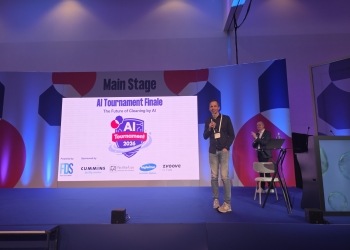
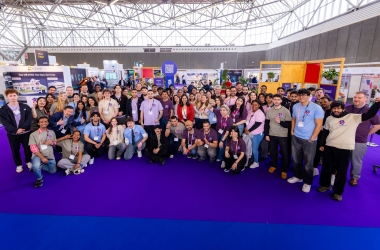
Against this backdrop, nearly 80 EBA (Entrepreneurial Business Administration) students from Wittenborg took part in one of the most impactful Project Weeks to date. During the Interclean AI Tournament, sponsored by FacilityApps, Cummins Facility Services, Zvoove and Hagleitner, 16 teams explored how artificial intelligence could reshape the cleaning and hygiene sector.
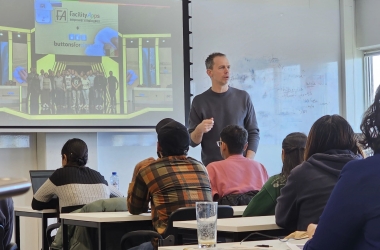
The project was introduced earlier in April during a kick-off session led by entrepreneur Dirk Tuip, former professional handball captain and founder of several technology companies, including FacilityApps.
Framing an Industry in Transition
During the briefing, Tuip challenged students to rethink how they view the sector they were about to work in. Rather than focusing on surface-level perceptions, he emphasised its scale, complexity and potential for innovation.
“We talk about an industry which is not necessarily ‘sexy’, but it is really big,” he explained.
His message set the tone for the weeks that followed: the cleaning and hygiene industry is not static, but increasingly shaped by data, automation and AI-driven systems.
From Preparation to Performance
Following the kick-off, students worked intensively in teams to develop AI-based solutions across sectors including hospitality, healthcare, office environments and public infrastructure.
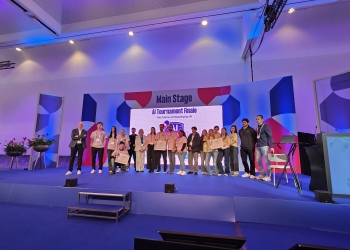
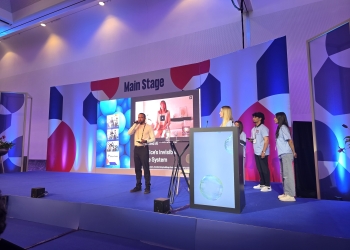
By 15 April, they arrived at Interclean Amsterdam with structured concepts developed alongside industry mentors and professionals from across the sector. Out of 16 teams, the strongest eight were selected to present on the main stage.
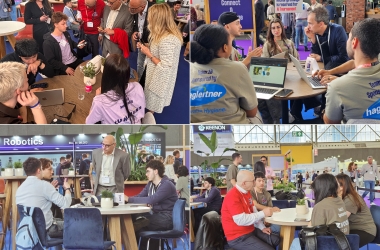
Across the tournament, teams focused on practical ways AI could improve everyday cleaning operations.
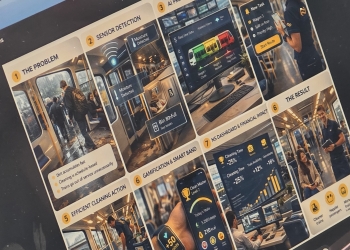
Several teams explored how to reduce miscommunication in service environments. One group designed a hotel operations concept using QR codes, NFC tags and AI translation tools to help guests send requests directly to cleaning and reception staff, reducing delays and misunderstandings.
Another team developed an AI-based quality control system using image recognition to assess cleaning standards and provide instant feedback, making performance easier to track and improve over time.
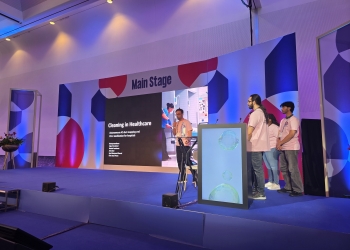
More technical ideas included drone-based cleaning for hospitals, particularly for hard-to-reach areas such as air ducts, and robotic systems that detect contamination and coordinate cleaning tasks automatically using shared sensor data. This drone-based hospital cleaning concept was developed by Team 8, and stood out for its focus on access and safety in environments that are difficult or unsafe for human cleaners.
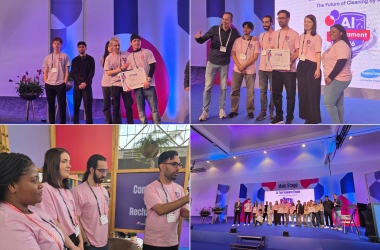
Winners of the AI Tournament
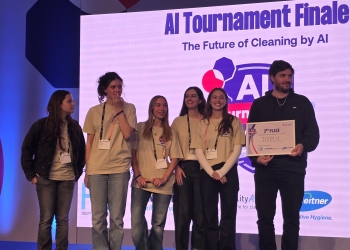
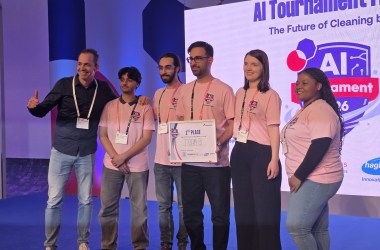
After a full day of pitching in front of industry mentors and judges, Team 8 was announced as the winning group. The team consisted of Sajjad Daralziaei, Natalie Pestukova, Aria Ziaei, Ruth Pierre and Maqsood Syed.
During a brief press conversation after the results, Daralziaei reflected on the experience, saying:
“The win was a big surprise. The experience overall was great fun.”
He added that developing the idea while working closely with mentors and exploring real industry challenges made the Project Week both intense and rewarding.
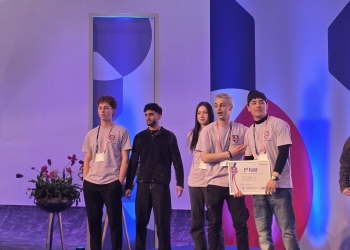
Teams 4 and 11 were also recognised for their strong concepts, sharing second and third place after presenting ideas that similarly focused on improving efficiency and communication in cleaning operations. Prizes were awarded to the winning teams.
Learning in a Real Industry Environment
For Cansu Tor Kadioglu, Assistant Professor of Applied Sciences and coordinator, the experience stood out as a clear example of applied learning in action.
She described it as one of the most meaningful Project Weeks she has coordinated, highlighting how students moved beyond theory into real industry engagement.
“Interclean Project Week was one of my favourite Project Weeks to coordinate,” she said. “Seeing our students work with industry mentors, explore companies, and present their ideas on a main stage at such a large international event was truly inspiring.”
For her, the key value lay in how the experience reflected Wittenborg’s approach to education.
“It perfectly reflects our approach to education with impact, giving students real-world experiences where they can apply their knowledge, build confidence, and exceed expectations when given the right opportunities.”
Industry Exposure at Scale
Dadi Chen, Deputy Head of the School of Business, also attended the event and emphasised its significance from an academic and industry perspective.
He noted that this was the first time EBA students had participated in an event of this scale during their Project Week.
“I have received immediate feedback from students expressing their thorough enjoyment of the tournament and their desire for further opportunities like this,” he said.
He highlighted how the format gave students rare access to industry knowledge and professional feedback.
“Students were able to engage directly with hundreds of organisations, receive guidance from professional business coaches, and explore real-world AI applications in a way that is not possible in a traditional classroom.”
WUP 22/04/2026
by Erene Roux
©WUAS Press