 Skip to main content
Green4ADU Webinar Insights Fuel Wittenborg’s Project Week on Sustainable Careers
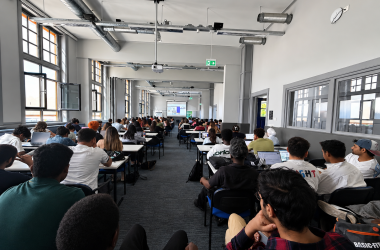
Green4ADU Webinar Highlights Real-Life Sustainability Challenges
As environmental awareness and transversal green skills continue to grow in importance across the labour market, education must evolve to connect theory with real-life impact. This synergy was clearly on display at Wittenborg, as the school combined its role as lead coordinator of the Erasmus+ Green4ADU project with its intensive BBA Project Week.
On 26 May, Wittenborg and the Green4ADU consortium hosted an international webinar aimed at empowering adult learners with emerging green competencies. The event showcased the project’s key achievements, including an interactive e-learning platform and the rollout of local workshops across Europe.
A key highlight was the presentation of the Green4ADU Toolkit by project partner CEIPES. The toolkit uses non-formal education methods, including “learning by doing”, to help educators create safe learning environments that promote both physical and psychological wellbeing alongside environmental awareness.
Participants also gained valuable insights from two guest speakers who explored different dimensions of sustainability and social impact.
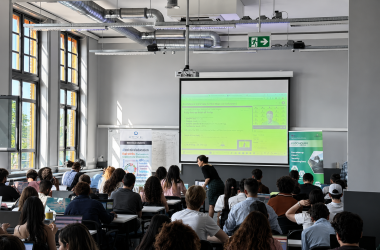
Marine Biodiversity and Ocean Literacy
Ludovica Montecchio, a PhD candidate involved in the MSCA consortium MEDiverSEAty, explored the human dimensions of Mediterranean biodiversity. She presented her work with Ocean-Archive, a digital ecosystem for a living ocean, and showed how art, science and education can work together to strengthen people’s connection with marine environments and encourage deeper environmental responsibility.
Tackling Energy Inequality
Marcus Banai, coordinator of The Hague’s Energy Coach Network, focused on the challenge of energy inequality in urban communities. He discussed the “Energy Equal Laak” initiative, which supports vulnerable tenants with practical energy-saving solutions, such as insulating curtains, rather than focusing solely on homeowners.
Banai emphasised that a fair and effective energy transition must address structural inequalities, including those related to gender and socioeconomic status, to ensure that no community is left behind.
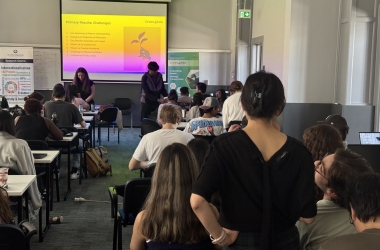
Connecting Green Skills to Future Careers
The themes explored during the Green4ADU webinar align closely with the focus of Wittenborg’s current BBA Project Week: Green Skills & Sustainable Careers.
While the webinar highlighted how international projects and community initiatives are addressing environmental challenges, the Project Week encourages students to analyse how these same green skills are increasingly valued by employers across sectors.
Working as consultants, students are challenged to identify real-life problems, develop actionable recommendations, and present their findings through a group presentation and video. The experience strengthens critical thinking, teamwork, problem-solving and communication skills, while encouraging students to consider the role sustainability will play in their future careers.
By bringing together the international perspective of the Green4ADU project and the career-focused approach of Project Week, Wittenborg is ensuring that students and staff are not only learning about the green transition, but are actively preparing to lead it.
WUP 08/06/2026
by Erene Roux
©WUAS Press