Skip to main content
Wittenborg's Amy Abdou Examines What Social Change Really Looks Like
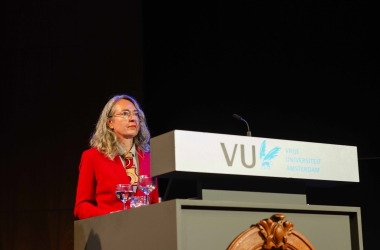
Abdou's PhD Explores Social Exclusion in Amsterdam Zuidoost
For years, Amsterdam Zuidoost has been the focus of efforts to tackle educational inequality, unemployment and social exclusion. Governments invested in urban renewal. Schools introduced support programmes. Community organisations and social enterprises launched initiatives aimed at improving opportunities for residents.
Yet despite these interventions, many of the challenges they were designed to address remain. Why?
That question sits at the centre of a PhD by Wittenborg's Amy Abdou, whose dissertation, Social Entrepreneurship and Social Exclusion: A Multi-Level Analysis of Education and Employment Initiatives in Amsterdam Zuidoost, examines how social enterprises operate, why some appear more effective than others, and what policymakers can learn from them.
Rather than asking whether social entrepreneurship "works", Abdou asks a more nuanced question: under what conditions can social enterprises contribute to reducing social exclusion?
Across four case studies her research suggests that organisational structure alone does not determine success. Instead, stakeholder participation, community trust, entrepreneurial adaptability and institutional support all shape outcomes.
Social Exclusion in Amsterdam Zuidoost
The first case study examines the history of urban renewal in Amsterdam Zuidoost and the relationship between residents, policymakers and redevelopment projects.
Abdou's analysis suggests that physical investment alone does not necessarily translate into improved social and economic outcomes. While new housing, infrastructure and businesses can transform a neighbourhood, lasting change is harder to achieve when residents have limited influence over decisions affecting their communities.
A recurring theme throughout the dissertation is that participation matters. Social enterprises, governments and public institutions are more likely to gain legitimacy and community support when stakeholders help shape programmes rather than simply receive them.
Educational Inequality and Homework Support
One of the dissertation's most detailed studies focuses on a non-profit homework-support programme serving hundreds of children in Amsterdam Zuidoost.
The findings were encouraging. Half of the participating pupils were ultimately advised to enter a higher level of secondary education than had been indicated in their preliminary school recommendation. Pupils reported greater confidence, improved Dutch-language skills and increased participation in school, while parents and staff were generally positive about the programme.
However, Abdou is careful not to claim causality. Educational outcomes are influenced by many factors, including schools, teachers, parents and home environments.
Instead, the research highlights organisational practices associated with positive outcomes, including small-group learning, strong relationships between tutors and pupils, parental involvement and safe learning environments.
Digital Literacy and Technology Education
Another case study examined two organisations working to expand access to digital literacy and technology education.
The research found that early exposure to technology often influences whether young people continue exploring digital skills later in life. Access to devices, role models, supportive learning environments and extracurricular opportunities all appeared to play an important role.
Although the organisations took different approaches, both relied heavily on partnerships and community engagement. Rather than waiting for large-scale policy reforms, they worked with schools, libraries, volunteers and donors to create learning opportunities and address unequal access to educational resources.
Sustainable Employment and the Energy Transition
The dissertation also explores employment initiatives linked to the renewable-energy sector.
With growing demand for technical workers, policymakers often view the energy transition as a source of future employment opportunities. Abdou examined whether existing training initiatives were accessible to residents who are vulnerable in the labour market.
Her findings suggest that private-sector programmes generally provide stronger pathways to long-term employment through recognised qualifications and clearer career progression. Community and non-profit organisations, meanwhile, were often more accessible and provided mentoring, coaching, networking opportunities and support for entrepreneurship.
Their contribution extended beyond employment, promoting sustainability awareness, strengthening local networks and creating opportunities for collaboration between communities, governments and employers.
What Makes Social Enterprises Effective?
One of the strongest conclusions to emerge from the dissertation is that there is no single organisational model that consistently outperforms the others.
Community enterprises, non-profits, social businesses and private-sector initiatives all displayed strengths and limitations. Some were better at reaching underserved groups, while others were more successful at creating pathways to employment or scaling their activities.
Across all four case studies, one finding appears repeatedly: stakeholder participation matters.
The research concludes that efforts to address social exclusion are more likely to succeed when they combine meaningful stakeholder involvement, diversified funding, adaptable organisational practices and strong relationships between public institutions and local communities.
For Abdou, the challenge is not simply designing better programmes. It is understanding how change happens, who gets involved in shaping it, and how social enterprises, governments and communities can work together to create opportunities that last.
WUP 12/10/2026
by Erene Roux
©WUAS Press