 Skip to main content
Wittenborg Welcomes More than 130 New Students for September 2026 Intake
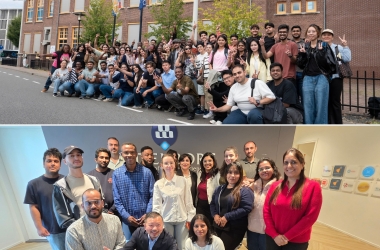
Students from 23 Countries Strengthen Wittenborg's Growing International Community
As summer gives way to a new academic year, Wittenborg has welcomed more than 130 new students for its September 2026 intake. The students will study across Wittenborg's locations in Apeldoorn, Amsterdam and Munich, joining an increasingly diverse international community.
Reflecting Wittenborg's commitment to internationalisation and diversity, the September intake brings together students from 23 countries across Europe, Asia, Africa, North America and South America. Countries represented include India, Nigeria, Iran, Vietnam, Sri Lanka, Ghana, Morocco, Ireland, Spain, Pakistan, Mexico and many more.
The students have enrolled in a wide range of bachelor's, master's, pre-master's and foundation programmes, pursuing specialisations in areas such as business, hospitality, technology, entrepreneurship, finance, health and social care, engineering and data analytics.
Wittenborg's six annual intakes are designed to provide flexibility for students from around the world. The September intake welcomes learners across foundation, bachelor's, pre-master's and master's programmes, reflecting the institution's internationally focused approach to education.
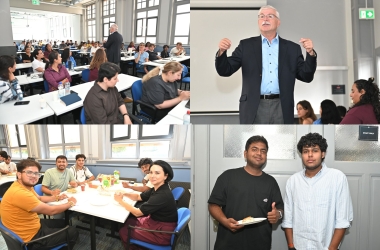
Introduction Week Begins the Journey
The September intake began with Wittenborg's Introduction Week, offering students an opportunity to familiarise themselves with their new academic environment, connect with fellow students and learn more about life in the Netherlands.
Throughout the week, students took part in a range of activities designed to help them settle into their new surroundings, build friendships and gain a better understanding of the support services available to them during their studies.
Welcoming students in Apeldoorn, Ron Tuninga, Rector, encouraged them to make the most of both their academic experience and the opportunities that come with living in a new country.
"I hope you will enjoy being in the Netherlands and at Wittenborg. This is a very international group, with students of many different nationalities. You have a unique opportunity to make friends with people from all over the world and learn from one another."
Reflecting on his own experience of studying abroad, Tuninga noted how much international student life has changed over the years through technology, while emphasising the continued importance of cultural immersion.
"When I went abroad to study, things were very different. Today, technology has made the world much smaller and allows people to remain connected while also experiencing life in a new country."
While emphasising the importance of academic success, he also encouraged students to embrace local life and culture.
"If there is even a small possibility that you might want to stay and work in the Netherlands in the future, learning Dutch can make a real difference. It helps you understand the culture and can open additional opportunities."
Tuninga also encouraged students to explore the Netherlands during their studies, highlighting attractions both within the Apeldoorn region and across the country.
"The Netherlands is a small country, which makes it easy to travel and discover different places. There is a lot to see and experience."
He pointed to some of the cultural attractions close to Apeldoorn, including Paleis Het Loo and the Kröller-Müller Museum in nearby Otterlo, home to one of the world's largest collections of works by Vincent van Gogh.
"Sometimes the most interesting places are right under your nose. Make sure you explore the region you're living in. There are remarkable places close to Apeldoorn and throughout the Netherlands."
Addressing the growing role of artificial intelligence in education, he reminded students that technology should complement, rather than replace, critical thinking.
"AI can be a useful tool and can help facilitate learning, but if you truly want to learn something, you still need to invest your own time and effort."
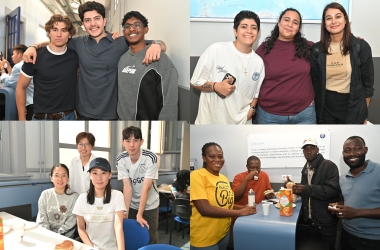
Settling into a New Environment
For many students, Introduction Week provided reassurance as they adjusted to a new country and academic environment.
MBA student from Iran, Reihaneh Khani, said that arriving in the Netherlands had initially been stressful, but that the support provided during the week helped her quickly feel at home.
"During Introduction Week, I spoke about how stressed I felt when I first arrived. But I really appreciate the environment and the staff here. They organised activities and involved us throughout the programme, which helped us get to know other students. After just a few days, I already feel much more comfortable. I feel safe here and I know there is always someone who can help me if I need support."
Another student from India highlighted the social side of the week, describing the STUFU Welcome Party, organised in collaboration with the Municipality of Apeldoorn, as a great opportunity to meet new people and learn about different cultures.
Students also took part in the municipality's city puzzle game, exploring Apeldoorn while connecting with fellow students.
Raudat Adenike Adeyemo, an MBA student specialising in International Management, said the activity provided a welcome break after a busy first day.
"It was a lot of information to take in and digest, but today has been really fun."
Another participant said the experience made her feel like a tourist while discovering Apeldoorn, while Promise Obinna Nnamdi, who is pursuing an MBM in Data Analytics, described the activity as "an amazing experience" that helped students meet new people and explore the city.
WUP 28/08/2026
by Erene Roux
©WUAS Press