Skip to main content
Wittenborg and JobOn Workshop Helps International Students Navigate the Dutch Job Market
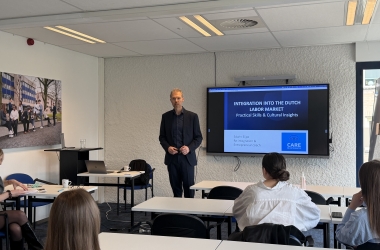
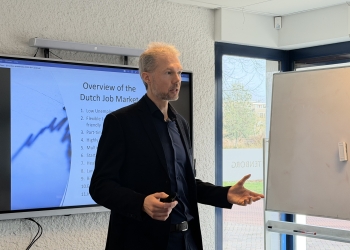
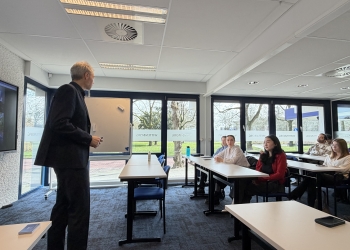
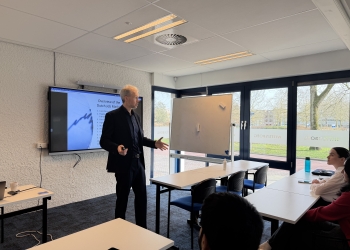
Edwin Eijpe Leads Workshop Helping Students Navigate the Dutch Job Market
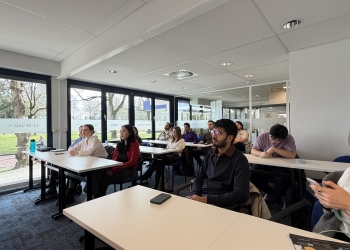
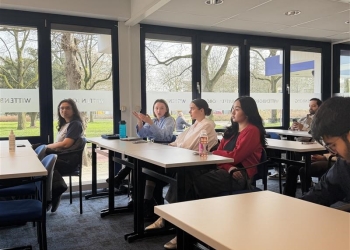
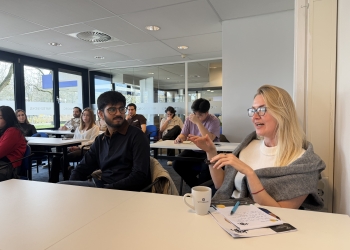
Students at Wittenborg recently gained valuable insights into working in the Netherlands during a special career workshop hosted in collaboration with JobOn.
The career development workshop titled 'Integration into the Dutch Job Market' took place on 6 March at Wittenborg’s Brinklaan study location in Apeldoorn and was led by recruitment professional Edwin Eijpe.
The workshop was designed especially for Wittenborg’s international student community, many of whom aim to build careers in the Netherlands after graduation. Eijpe shared practical advice on navigating the Dutch labour market, preparing job applications and understanding workplace culture.
During the session, he offered insider perspectives to help international students better understand the Dutch labour market and prepare for their future careers in the country.
Based in Amersfoort, Eijpe has more than seven years of experience supporting professionals entering or re-entering the labour market. Much of his work focuses on helping people understand how to position themselves for roles in the Netherlands and how to navigate the recruitment process.
For students considering staying in the country after graduation, he began with encouraging news. He explained that companies are actively looking for people to fill roles, especially those requiring specialised skills.
Understanding Dutch work culture
Eijpe highlighted several key aspects of Dutch workplace culture that international professionals should be aware of. These include a strong work–life balance, relatively flat organisational structures and a direct communication style.
“In the Netherlands we have a very healthy work–life balance,” he said. “We expect that you turn your phone off after work. We don’t disturb you in the evenings unless you choose to. It’s respected because we know people need rest to stay healthy.”
Communication in Dutch organisations can sometimes feel very direct to newcomers.
“We give feedback directly,” he said. “It’s not rudeness, it’s efficiency. Everybody knows what they’re acting on.”
Team input is also an important part of decision making.
“We tend to work on a consensus basis. We ask everybody for their opinion and take that into account. In the end the manager decides, but the input from the team is important.”
Opportunities for international professionals
Eijpe also highlighted the many opportunities available for international graduates in the Netherlands, especially in technology, digital sectors and multinational companies where English is often the working language.
“There are a lot of multinational companies where the internal language is English,” he said. “Start-up companies can also be a good place to start because they often have fewer problems if you don’t speak Dutch yet.”
Creating a strong CV
A large part of the workshop focused on practical job search tips, starting with how to build an effective CV.
Eijpe advised students to keep their CV clear and concise, usually one or two pages, with work experience presented in chronological order. Tailoring the CV to each role is also important.
“What I do with the CV is always tailor it to the job you’re applying for,” he said. “LinkedIn is more general, but your CV should be specific.”
Students also asked whether a photo is necessary. Eijpe said it is optional, but often helpful.
“You can skip it, but I would recommend putting it in,” he explained. “The most important thing is making it easy for recruiters to understand what you do, your work experience, your studies, your skills and your language level.”
For those without a professional photo, he suggested keeping it simple.
“Select a nice picture, remove the background and you have a good photo. Look straight at the camera at about a 45-degree angle and smile. It doesn’t have to be passport quality.”
He also recommended tools such as Canva to create clean and visually clear CV layouts.
Writing cover letters and preparing for interviews
When it comes to applications, Eijpe encouraged students to personalise their cover letters and avoid generic templates. Researching the company, highlighting relevant skills and clearly explaining motivation are key steps.
He also noted that AI tools such as ChatGPT can be useful when drafting applications, as long as they are used as support rather than a replacement for personal input.
“Use AI as an assistant,” he said. “But always personalise it and make sure it reflects you.”
The session also covered job interview preparation. Eijpe advised students to research the company, review the job description and think carefully about how their skills match the role. Using the STAR method to structure answers can help candidates explain their experiences clearly.
Networking was another key theme during the workshop. Eijpe encouraged students to attend events, connect with professionals and make use of platforms such as LinkedIn when searching for opportunities.
While many international professionals work in English-speaking environments, learning Dutch can still be helpful. Eijpe suggested visiting local taalcafés, joining municipal language buddy programmes and using language-learning apps such as Duolingo.
WUP 16/03/2026
by Erene Roux
©WUAS Press