 Skip to main content
'We Can’t Live Without AI': Workshop Explores the Rise of Hybrid Intelligence in Higher Education
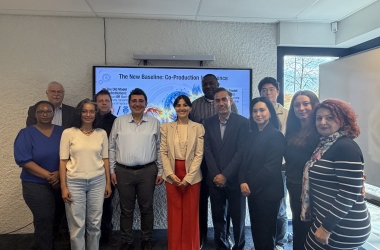
Prof. Dr Sacip Toker on Hybrid Intelligence and the Future of AI in Higher Education
Professor Dr Sacip Toker, Chair of Information Systems Engineering at Atılım University in Türkiye and a researcher in artificial intelligence, educational technologies and emerging digital systems, recently told participants at Wittenborg that artificial intelligence is no longer an emerging technology but a defining feature of the present era.
Speaking at a workshop titled Teaching with Generative AI in Higher Education: An Introduction to Hybrid Intelligence on 16 April, Toker argued that the release of ChatGPT in 2023 may in hindsight be seen as the beginning of a new technological age.
“Maybe 50 years later, people will say the AI age started in 2023,” he said.
The session, held in Apeldoorn and attended both in person and online, brought together educators and researchers to discuss how generative AI is reshaping teaching, assessment and academic work.
Toker outlined a framework he described as “hybrid intelligence” in which human expertise and artificial intelligence operate in tandem rather than in competition. Generative AI tools such as ChatGPT, Claude, Gemini and Perplexity, he suggested, are already changing how academic work is produced, from research and writing to instructional design.
But he cautioned that the shift is not simply technological. “We can’t live without AI anymore, because AI is the reality,” he said, adding that the challenge lies in understanding “our role” alongside it.
A significant part of the workshop focused on the risks of generative systems in academic contexts. Toker highlighted the tendency of large language models to produce convincing but inaccurate outputs, including fabricated references, often referred to as “hallucinations” or “phantom citations”.
To mitigate this, he stressed the importance of critical engagement and structured prompting, arguing that effective use of AI depends on clearly defining roles, context, tasks and output formats.
The discussion also turned to assessment in higher education. Toker argued that traditional take-home assignments are becoming increasingly vulnerable to AI-assisted completion and may no longer reliably measure student learning. Instead, he advocated process-based assessment methods such as oral examinations, in-class tasks, and reflective exercises. One example he proposed was “hallucination hunting”, in which students are asked to identify and correct errors in AI-generated content.
Despite these concerns, Toker also emphasised the productivity gains associated with generative AI. He pointed to reduced administrative workload for educators, faster development of teaching materials, and improved feedback processes. He also highlighted the potential for AI to support multilingual learning and improve accessibility for non-native speakers.
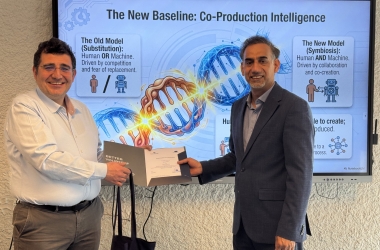
During the workshop, he presented a framework suggesting that AI could significantly reduce educator workload, improve student performance through adaptive learning systems, and enhance accessibility in multilingual contexts. However, he noted that such claims should be understood as part of a broader shift in how educational value is being framed in an AI-driven environment.
Beyond classroom practice, Toker also pointed to the growing institutionalisation of AI research in Europe. He referenced ongoing Erasmus+ and Horizon Europe initiatives focusing on AI ethics and higher education, describing them as increasingly competitive, large-scale collaborations requiring strong research teams and publication records.
At the same time, he acknowledged that the internal workings of modern AI systems remain only partially understood, even by researchers in the field. Referring to training architectures such as “teacher” and “student” models in machine learning, he noted that unexpected behaviours can still emerge, highlighting both the sophistication and opacity of current systems.
The implications, he suggested, extend beyond universities. As students grow up in environments where digital tools are ubiquitous, schools may increasingly shift away from knowledge transmission towards the development of social and interpersonal skills.
“Students already learn everything from their smartphones or tablets,” one participant noted during the discussion. “The only thing they gain in the classroom is social skills.”
The workshop concluded with a recurring theme: balance. While artificial intelligence is increasingly embedded in education systems, its impact, Toker argued, will depend less on the technology itself and more on human capacity to interpret, guide and critically engage with it.
“It’s not dependent on the technology,” he said. “It depends on our skills and cognitive abilities. We have empathy and emotional intelligence. That’s why we can make intuitive decisions.”
For many in the room, the message was less about technological disruption than about adaptation: AI is already present in higher education, but its role is still being defined.
WUP 24/04/2026
by Erene Roux
©WUAS Press