Skip to main content
From Malta to Slovenia: Students Pitch Ideas and Explore Startups Through Erasmus+ Programmes
Wittenborg Students Join Erasmus+ Trips in AI, Sustainability and Entrepreneurship
Wittenborg University of Applied Sciences students have taken part in Erasmus+ Blended Intensive Programmes in Malta and Slovenia, gaining hands-on experience in sustainability, artificial intelligence and entrepreneurship while working with peers from across Europe.
The short intensive programmes brought together students from different countries to tackle real business challenges, develop startup ideas and explore how modern companies can operate more responsibly in a fast-changing world.
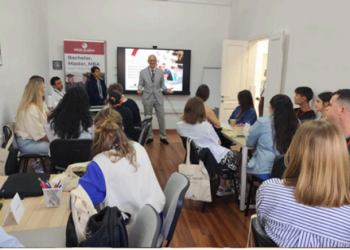
In Malta, students joined the programme Innovate for Impact at GBSB Global Business School where they focused on how businesses can support the United Nations Sustainable Development Goals. The main themes were decent work and economic growth and responsible consumption and production.
Instead of only listening to lectures, students were placed in a business simulation where they acted as company executives. They made decisions on pricing, strategy and sustainability while competing with other teams. The aim was to show how difficult it is to balance profit with responsibility in real markets.
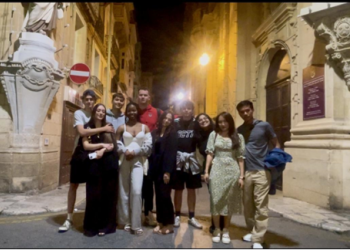
Students also worked on group projects and pitched solutions for more sustainable business models. Outside the classroom, they joined an international dinner at Malta Port and visited cultural sites across the island, which helped students connect informally and build friendships.
One student described the experience as “a classroom without walls” where learning came from both academic work and cultural exchange.
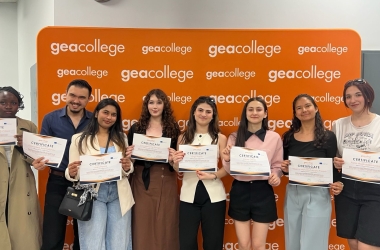
A second programme in Slovenia took students to Ljubljana where they joined From AI to Practice, organised by GEA College Faculty of Entrepreneurship. Here, the focus shifted to artificial intelligence and startups.
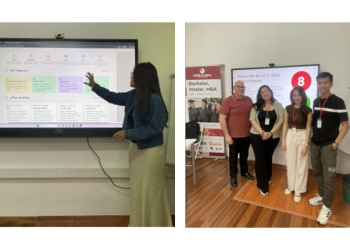
Students worked in international teams to turn ideas into business concepts using tools such as design thinking, Lean Canvas and digital marketing. They were supported by mentors from academia and industry before presenting their final startup pitches.
The programme also included a virtual preparation phase before the trip, followed by several days of intensive teamwork in Slovenia.
Around 40 students took part, including a group from Wittenborg. For many, it was their first experience working so closely with students from different countries on a business idea.
Wittenborg student Anita Panahi said the programme helped her understand how trust and authenticity matter in digital business. Her team went on to win first place in the final pitch competition, which she described as a proud and unexpected moment.
Other students highlighted how valuable it was to meet people from different cultures and learn how teams work under pressure. One participant said the experience helped him build new friendships and better understand European collaboration and inclusion.
Another student, Zahra Geraili, said working on AI startup ideas with international peers gave her new insights into teamwork, innovation and real-world problem solving. She also called for similar opportunities in the future, saying they help students broaden their perspectives and build confidence.
WUP 08/07/2026
by Erene Roux
©WUAS Press