 Skip to main content
Digital Consumer Behaviour: How Students Are Rethinking Overconsumption
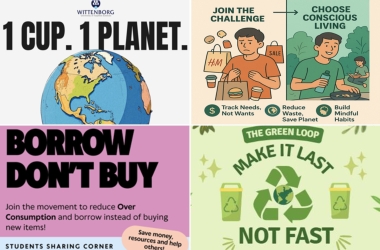
Students Explore How Digital Design Shapes Consumption
What does overconsumption really look like in a university or business school environment? In the MA27 Digital Consumer Behaviour course at Wittenborg, students were challenged to answer that question not just in theory, but in practice.
As part of the module, students were asked to identify everyday examples of overconsumption within a university or business school setting, analyse them through digital consumer behaviour theory and present their findings in the form of awareness posters alongside practical solution proposals. The aim was clear: move beyond abstract concepts and turn insight into action.
The posters highlighted familiar patterns. Impulse online shopping, excessive takeaway consumption and fast fashion driven by online marketing were identified as common behaviours among students. Rather than criticising individuals, the projects examined how digital systems, convenience and design shape these habits.
For Cansu Tor Kadioglu, Lecturer, the most rewarding aspect of the course was seeing students apply theory to real life. “The highlight for me was seeing students move beyond theory and actively apply what they were learning to real digital consumption behaviours,” Tor Kadioglu explains.
Alongside key concepts such as overconsumption, nudging and behavioural bias, students analysed their own digital environments, including the platforms they use, the content they consume and the systems they participate in. This approach allowed them to see how digital spaces shape needs, expectations and decision making in practice.
EBA student Zakaria Id.Bouhouch found the experience particularly impactful. “Instead of looking at sustainability in abstract terms, we observed real behaviours and reflected on how small, habitual actions can have a large cumulative impact,” Zakaria says. “That practical lens made the course feel very relevant and engaging.”
The assignment also prompted personal reflection. He describes becoming more aware of how overconsumption often happens unintentionally. “I realised that behavioural habits rather than carelessness often create the most waste. My focus changed from blaming individuals to looking at systems, habits and the role of design in shaping behaviour.”
This thinking informed his project 'Reducing Water Overconsumption from Dishwashers'. After observing reusable cups being washed after a single use, his team proposed using small prompts and reminders to encourage students to wait until machines are full. The project demonstrates how behavioural science can provide cost-effective sustainability solutions without requiring major structural change.
Other students developed broader initiatives. One proposal suggested creating a digital platform where students could borrow, exchange or repair items, share surplus food or materials and access sustainability tips and local repair events. The idea was to integrate sustainable choices into everyday digital routines, making responsible consumption easier and more accessible.
Additional projects such as the 'No Spend Challenge', 'The Green Loop' and a digital exam planning proposal promoting paper-free solutions addressed sustainability, digital responsibility and ethical engagement from different perspectives.
For Tor Kadioglu, that awareness is key. “I hope students understand that sustainability in digital consumption starts with awareness and informed choice,” she says. “More importantly, I want them to feel equipped to navigate real-world, digital environments responsibly and make more conscious, ethical decisions as consumers and future professionals.”
WUP 18/03/2026
by Erene Roux
©WUAS Press